
December 21, 2022, is the Winter Solstice. It’s the shortest day and the longest night of the year. In Celtic Traditions, Winter Solstice sees the …
Brazen Solstice 2022
December 21, 2022, is the Winter Solstice. It’s the shortest day and the longest night of the year. In Celtic Traditions, Winter Solstice sees the …
Brazen Solstice 2022
Hogmanay nears, as does what can barely be avoided — the annual consolidation, the ‘review’ as we step over the next threshold.
It’s been another year of tumultuous news and events stabbing the air in-house and in close proximity. Health issues have arisen in many, some near and dear, some farther but no less dear to me—several with fatal implications, where time somehow runs faster on the clock. My heart has shattered a few times. Such is the way it goes.
Covid hit my house with a bang. I was pregnant, and the baby, Averey, died inside my womb when I had the worst symptoms. Since our second bout in July, long Covid symptoms have persisted, including with my young children. The year that we hoped to grab some social normality has demanded much push.
One of the many benefits of home educating (not home-schooling) is that the pressure and stress on children not to ‘fall behind’ on a prescribed curriculum and being ‘marked’ by ‘poor attendance’ due to health issues beyond control is absent, avoiding undue pressure on my kids’ mental health, to which almost anyone who has been schooled and has health issues can relate. All public services in the U.K., including schools, seem to be on a steep downward slope, faster than ever before. The unrest is palpable. That being said, home educating isn’t all skipping through the daisies! Many days have their challenges, and being the literal full-time parent and educator is tiring — and that was before the long-covid fatigue. Still, we get each other through, and the alternative isn’t an option.
As always, writing has been a constant. Separate from my creative writing, it’s been my introvert-central-management system since childhood. Sketching is too.
Professionally, I have had the pleasure of editing works by some fantastic writers this year — some serious jaw-dropping, inspiring talent. One of the last short stories I edited had me reaching for my inhaler! That author painted a vivid anxiety, paranoia-ridden piece in their protagonist — I felt it all! The subversive angle of the work while playing off the backdrop was skilfully moving. I was in awe. In the massive catalogue of literary genres, the immense skill some horror writers portray is hugely underrated, all due to that simple label ‘horror’. You’ll find the asthma attack-inducing story in KJK Publishing’s The Horror Collection: Sapphire Edition.
This year Ruthann Jagge and I joined forces and created Brazen Folk Horror to share our collaborative works. We have been sharing weekly updates there and have many more ideas for the future. As with this site, readers can subscribe to receive those updates directly in their mailbox. The debut collaborative novel under our exclusive in-house imprint, Delevan House, releases on the 1st of February 2023, and the second book in that series is underway. I’ve shared before about how I adore working with her. We’ve each had much to contend with this year. At times, we’ve both been swimming against a ferocious tide, but we have prevailed and have created something unique from Scottish and Celtic folk inspiration. You better believe my girl and I are indeed Brazen as fuck.

Getting back into academic study has been challenging to make space for, but somehow It’s been working out, in sacrifice of sleep! I passed my first module and started my second towards my English Language and Literature degree. The second part has been immensely inspiring. I am enjoying it far more than I anticipated. It’s ignited old and new passions for my own language, those that I’ve been surrounded with and the broader scope of the world. I’ve been evaluating how this entwines cultural and individual identity. This leg of the course has lit a few fires.
Onto the books published under Clan Witch this year:
Asylum Daughter — my psychological horror novella set in Glasgow, Scotland. I’m proud of how this piece turned out. I loved writing it and got to exorcise the asylum.
The Crash of Verses by Rafik Romdhani — this is Romdhani’s second published collection. His poetry is among my favourites of recent years. If you have not read him, pick up this book. He is an exceptionally skilled modern poet.
Incesticide: Collected Horror — my second collection of short horror fiction. It includes nine stories featuring urban folk horror, a touch of splatterpunk and fairytale horror twisted with BDSM, among other assorted flavours for those who enjoy a taste of different things.
Clan Witch: Found Shadows, my collection of free verse poetry and drabbles. This brings together small pieces scattered with other publishers and some never before published poems. Not all truth and not all fiction.
There have been other written pieces published throughout 2022 in the form of short stories, poetry, articles, forewords and copy for other titles.
What about the birds? Birds have been a significant and symbolic component in my year. Before the baby was born, magpies started frequenting my garden. They never had before. In truth, I was never a fan of the species. (Largely due to a childhood memory or a magpie killing sparrow chicks in a neighbour’s garden. It was such a brutal attack, not for a meal or anything. It seemed to enjoy causing the suffering and instigating horror in the flock of sparrows screaming at the beautiful beastly creature.) Other corvids, such as their cousin, jackdaws, yes. But never the magpie. Of course, going through pregnancy and loss again, this felt strikingly symbolic. For the longest time, there would be one—a dark omen. One for sorrow… as the months have passed, groups of them now frequent the garden along with the smaller birds, which have their daily routines flying in for a feed and natter. Adopting ex-commercial laying hens scheduled to be slaughtered has been tremendously healing. We brought them home less than two weeks after our loss. Building for them and supporting their transition to domestic retirement felt like a productive and helpful use of grief energy. Then the hens have taken in robins. The birds have been inescapable and have become a significant feature of Delevan House too.

Life and creativity can be inseparable, at least elements of each. Twisting tendrils that reach out to be touched and woven into new patterns.
I am wrapping up, as I didn’t intend on doing this kind of update this year! There you have it, a wee mixed-bag summary of 2022. I best be off again, I’m currently hauled up with an unwell small. Her feverish chattering dreams spill out into the dark in a torrent, and I wish, as many parents do — I wish I could soak up the fever and take all the pains away, for always. But life has so much more of that in store. I will have to be content with holding her for as long as I can and as long as she needs.

The darkness is drawing in, approaching the longest of nights, and I wish for what I always do here and the world over, peace.
Natasha )O(

Wrapping Up Brazen Folk Horror presents the print cover wrap for Delevan House. Isn’t it a beauty! The cover image was created by the immensely …
The Making of Delevan House #18
In times when the costs of everything are skyrocketing, and artists have a hard enough time as is. I implore my fellow writers, even if you’re commanding the mammoth task of editing your own work, do not rely on editing software. It’s a mistake that your work and reputation will suffer for. Can your career afford that? Even premier-rated software is a poor substitute for the human eye and mind. This is especially true of fiction works.
I repeat: Editing software is not a substitute for an editor. It cannot take the place of an editor.
As a freelance editor, I often take on projects where I am the sole editor. Many independent writers, independent publishers and small presses can only afford one editor, whether in-house or by hiring another independent like Word-Refinery. This makes the process different to large house publishers, where multiple rounds are passed through multiple eyes, which incurs greater costs.
In the business of freelance editing, this is where, as an independent, editing software can be a helpful tool. To act as another pair of ‘eyes’ for the independent editor after they have completed their edits.
This is how I utilise such software – as a tool at the end of the more critical manual edit.
This software does not understand tone and the expansive varieties of Englishes. These softwares lack awareness of genre targets. They lack the ability to support the development of a text so that it reads in a way that leaps from the page and is not ‘flat.’ These softwares often apply sensitivity alerts which can strip a piece of its integrity, style and diminish the author’s voice.
Even if you cannot afford to hire an editor, editing software is not a substitute for an editor, even at a premium rate.

Converging Paths BrazenFolkHorror I share many old and new stories at home. As a family, we love to read aloud together. A habit I’ve shared and …
The Making of Delevan House #15

Incesticide: Collected Horror has almost emerged! Due to some interruptions within the industry and the panic rumour mills spinning, I decided to get things placed early to ensure the print edition launched in time with the digital. Well, this strike was swift, and the print editions are now (quietly) available ahead of the official release of December 14th.
The collection features nine unique short stories, each followed by a few words on how they came to be.
I painted the artwork for the book. Taking loose inspiration from the book’s namesake – Nirvana’s Incesticide cover art by Kurdt Cobain. I was delighted with how the painting turned out, and have created some exclusive products featuring the print available on my Etsy store.
Thank you to everyone who had preordered. I hope you enjoy my little morsels of horror.
If you fancy a listening to me reading a story from the book, Fuckin’ Maggots is featured on my Youtube.


Going Rogue #BeBrazen The earliest use of the term is regarding elephants. There are “elephants” in any room, group, gathering, or social structure. …
The Making of Delevan House #12

Imbolc is situated between Winter Solstice and Spring Equinox. It’s a Celtic festival celebrated across Scotland and Ireland since the Neolithic …
Delevan House Announcement
One of the most prolific characterisations called upon in the writing of horror fiction is that of the Witch. The incarnations cross genres, not exclusive to horror. The notions of the Witch rouse deep interest that peaks at no other season as high as it does around Halloween. From the green-painted faces of cloaked children playing the hag, practicing cackles for trick-or-treating shenanigans to the overwhelming number of book and movie releases parading their Witch down the street, through blood-thirsty crowds for all to fear and jeer. It seems that our curiosity, bedazzlement and fear of her are insatiable.

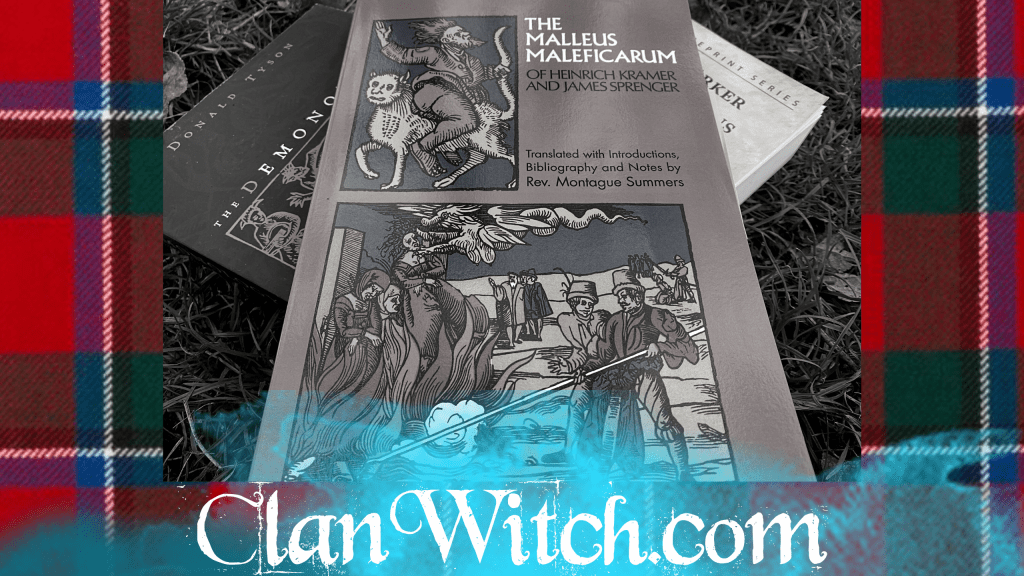
Our Witch has been the macabre crowd-pleaser since the hysteria that rippled through the world with the support, encouragement and rise of Christianity in organised religious dominance. The mania began in Europe in the fourteenth century, and such infamous texts as the ‘Malleus Maleficarum’ by Heinrich Kramer, published in 1486, propelled the hysteria and resulting brutality of the executions peaking several times between 1560-1630. Leaning heavily on the support of the church, the author of the text included Pope Innocent VIII’s 1484 Papal Bull, Summis Desedirantes, as the opening to the ‘Malleus Maleficarum’.
In this article, the pronouns she and her are favoured when referencing the Witch. While this is not uncommon, it must be acknowledged that from a true historical context, those trialled, persecuted and executed were predominantly female. There were men among them too. And, of course, in fiction, and real-life practitioners of the craft or occult arts, Witch can be of any gender. The dominance of prosecution and the use of the word as a slanderous term is weighted heavily towards women, hence the conscious choice of those pronouns here. Evidence suggests that 85% of the accused (in Scotland) were women. Fuelled by the desire for religious and political dominance, the Witch persecutions were also profoundly misogynistic. Hundreds of years on, these are issues which still impact society today.
The earliest printed reference of the noun ‘Witch’ was c950-c1010, Early Middle English, (Ælfric Homily (Corpus Cambr. 178) in J. C. Pope Homilies of Ælfric (1968) II. 792 Nu segð se wyrdwritere þæt seo wicce sceolde aræran þa of deaþe þone Drihtnes witegan Samuhel gehaten.) The heavily linked noun ‘Witchcraft’ was also first printed in the Early Middle English period, c1000, (Ælfric Lives of Saints (Julius) (1881) I. 182 Animað hraðe þa reðan wiccan, seo þe ðus awent þurh wiccecræft manna mod.) Although it may appear, at times, like a trend has taken hold in books or film — the Witch-craze has never really left us. Our Witch has held claim as a steadfast trend of constancy throughout history, one to love or hate but never to be indifferent to. This fascination or, perhaps more, obsession has endured. The Witch continues to thrive, though in a far more acceptable way than during such times as the six Witchcraft Acts, which presided through British history, criminalising those deemed to be Witchcraft practitioners, punishable by death. Scotland had a particular thirst for Witch hunts, murdering five times more people for crimes of Witchcraft than anywhere else in Europe.
In the 21st century, such Acts as these no longer have any place in European legal systems. Committed to a shameful part of human history, where many are working to recognise those murdered and have their criminal status pardoned. These women and men brutally murdered under the laws of the time were innocent of their charges. During the periods of Witch-mania, many (if not all) of those accused, trialled and executed were not done so fairly. Sensationalised witness reports that commonly claimed diabolism, shape-shifting and dancing with the Devil himself became a death sentence. Logic and facts had no place to play in these judicial procedures; macabre entertainment for the masses writhing in fear and fantasy that they themselves created. The control of organised religion reigning at its finest. Documents from these cases are often sketchy, and some are entirely nonexistent. Many cases escalated to local churches, and communities taking the law into their blood-thirsty hands. If anyone was dancing with the Devil, was it really those persecuted as Witches?
Considering this grisly past that spawned in Europe and spread rapidly around the globe, we must remember that there are countries where accusations of Witchcraft stillresult in severe and brutal physical punishments (and death) today. While here in Scotland, the Witchcraft Act was repealed in 1736, and the last documented legal execution took place in 1727, almost 300 years ago, religious and spiritual persecution is still alive and comes in many guises.
In modern Europe, the historic Witch-persecutions are crisscrossed with a romanticism of a deadly, dark past, and fictional notions embraced to stroke these romantic ideas of magical ancestry. She is symbolic of both innate feminine strength and endurance as well as female oppression by a predominantly patriarchal society. When considering the data available from cases of the Witch trials and applying something missing from these cases—logic—one thing is clear, many of those trialled and executed were not Witches; they were not pagan in the contexts of today. Many of the accused and found guilty were victims of flimsy, vague laws, hearsay, panic and hate.
There are groups still fighting to seek justice for these heinous acts, such as Witches of Scotland, ‘–a campaign for justice; for a legal pardon, an apology and national monument for the thousands of people – mostly women – that were convicted of Witchcraft and executed between 1563 and 1736 in Scotland.’
While work is still ongoing to achieve the legal pardon of some 4,000 people killed under the Acts, a formal apology was granted by the First Minister of Scotland on 8th March 2022, “on International Women’s Day, as First Minister on behalf of the Scottish Government, I am choosing to acknowledge that egregious historic injustice and extend a formal, posthumous apology to all those accused, convicted, vilified or executed under the Witchcraft Act 1563.” Read the full statement here.
While it is, perhaps, admirable to fight for the status of the victims of the laws of that horrific time, and it’s important to acknowledge the gross misconducts of governments, kings, religion—misconducts that were regarded as just at the time. Their greed for ultimate control and thirst for blood and brandishing ‘authority’, the acknowledgments, memorials, and apologies of descendants will never give the victims their lives back. We cannot undo the horror of their torture—starved, pricked, stripped, poured with tar, thrown in barrels and rolled through the streets, strangled, drowned, burned, all under the eyes of the law, ‘God’, their communities and families. There’s no making up to the victims labelled as Witches. And there’s no romance in their trials. What we must do is step forward; don’t stand fearful among the crowd breeding hate. Learn from the past. Step forward. Speak up for injustices, no matter how small they may appear. History and present day horrors show us how easily pandemonium can take hold, by then it’s too late. Say nothing, do nothing, and one may as well be lighting the pyre.

To my fellow creative fiction writers: If you find yourself allured by the Witch trend, design her without feigning research—reaching for a few easy-to-find titles, selected based on the copy intended to sell you that specific content, the cover, or recommendations from non-practitioners is not research. This is the microwaveable noodle of cooking. This approach will never bring you proper knowledge and depth to create authentic flavour.
Design her with the authenticity of a true creative; think outside those boxes. That is the way of a Witch—pay homage to that in your creative endeavours. If you desire true historical context or true spiritual context, you’ll have to dive much deeper than any off-the-rack ‘spell book’. These books are often born from limited research themselves to base one’s research on, then you’d be in a sorry state to claim to know anythings but anecdotal drivel. Research on these subjects is a dedicated, lifelong business. Not a flurry of ticking boxes. Spiritually, there is reason many who walk occult or pagan paths refer to life and work within these arts as an ongoing ‘practice’. The trials and persecution of accused Witches is entirely separate to practitioners of any one of many pagan pathways—real Witches. As a practitioner of 20+ years, my clan’s Witch, I am still a mere amateur. Arrogance has no place in these arts, if it does in any at all.

Samhain Weekend Samhain (All Hallows Eve) signals the end of the year for some. As nature’s wheel turns, the season cycles towards peace found in …
The Making of Delevan House #11

 Clan Witch & Word Refinery