Talk about curveball 2022! Another year of madness! There were plans. Big beautiful plans! And while those plans still exist, there has been movement because of those unexpected transitions life has her way of throwing. Personally, I’ve had some family upsets which I predominantly have to deal with and process alone (my partner, of course, has supported as much as one can). I’ve angered, been frustrated, hurt, grieved, run myself in circles, hurt some more, and accepted. Because sometimes that’s all we can do. Accept to find crumbs of peace and carry on. It just takes a little time. It’s a process many are familiar with. It’s been heavy.
Following the acceptances of a triple-pronged hit, I’ve another unexpected ‘bump’, who made himself known in a dream. My kids are excited about another sibling to teach and get up to extra mischief with. Since I have complicated pregnancies, and this one has already given us some wobbles, I’m (again) doing everything within my control to keep this little one inside until late 2022, ideally early 2023. My cervix needs a mantra, and this is the last! The instant physical hit means I’ve been heavily fatigued, and as of that wasn’t enough, I’ve been hammered with mine and the kids’ second bout of Covid of 2022. Because I wasn’t wiped enough by the heavy graft underway in my uterus, I am zapped because my lungs are in battle, and my body feels like it’s been used as a punchbag.
Moving in from all of that, onto the writing front update:
My sassy, immensely talented, and inspiring co-author, Ruthann Jagge and I launched our website, BrazenFolkHorror.com, for our upcoming 2022 release, Delevan House and future projects. Ruthann also released her fantastic solo debut novella in January 2022, The New Girls’ Patient; if you haven’t read her, this is an excellent example of her extraordinary work that should be on any horror fan’s reading list.
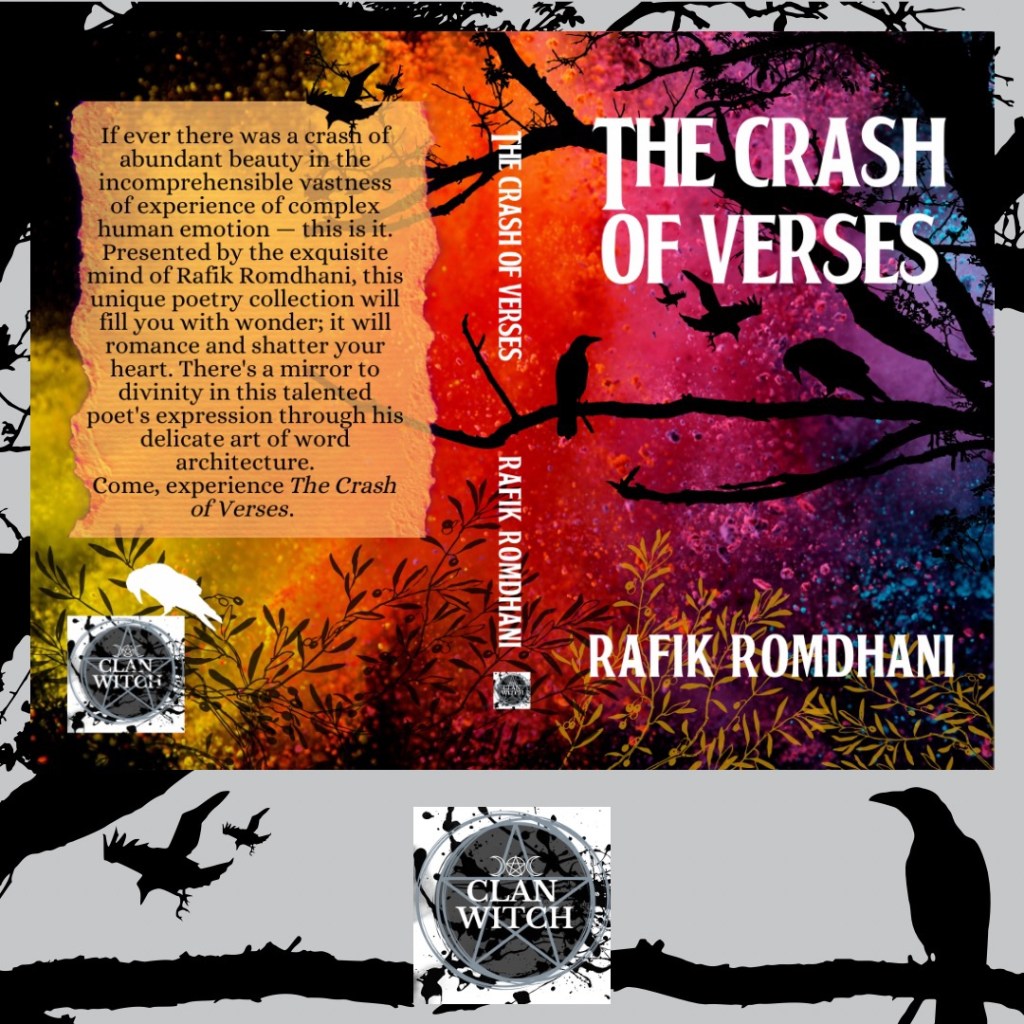
I’ve still been editing work for other writers and publishers via Word Refinery and also published poet Rafik Romdhani’s collection, The Crash of Verses.
I am working on my degree course too.
The latest developments has zapped my study schedule. I hope to recover enough to make up for that soon. Deadlines are looming! Anthology wise, unlike in the previous two years, I have not responded to any open calls. My dance card has been packed. I have gratefully received several invite opportunities but unfortunately had to decline several. One that I was able to submit a piece to was with KJK Publishing’s The Horror Collection: Nightmare Edition, which has just been released. It’s the biggest collection of the twelve-book series and worth picking up for a good flavour of many popular independent horror authors currently putting our new materiel.
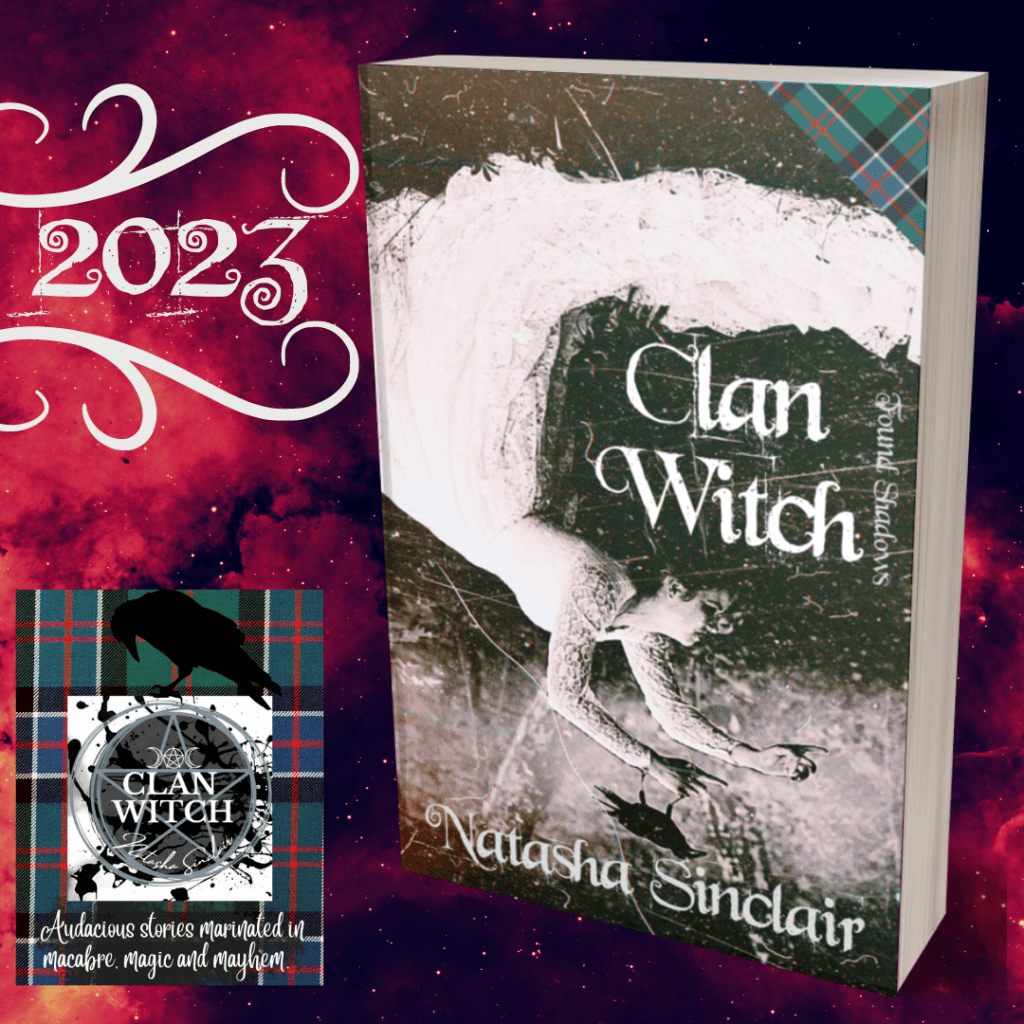
More still to come for 2022, and 2023 is also beginning to fill up with a couple of accepted invites, continued work with my brazen co-author in crime and at least one (hopefully two) solo release(s). One of which will be a collection of poetry and drabbles, Clan Witch: Found Shadows.
At first, I didn’t know that inventing short songs and humming them in the fields of wheat and barley while stumbling behind my parents was what would, later on, develop into a form of writing. Writing has already been there in such funny songs I used to create out of the blue and sing in Tunisian spoken language (i.e. an amalgam of Arabic, French, and Barbarian) at the age of ten. I remember myself once beading words into smooth-running utterances and reciting them before a group of gleaners at tea time, which made everyone around express their admiration and admit that I am a gift to them to while away the tedious hours. Putting pen to paper and speaking my mind began later as I fell in love with Charles Baudelaire’s The Flowers of Evil, taught by Mustapha Dhaya, our teacher of French when I was a student at secondary school. I started writing short poems in French and Arabic between 1994 -1999. But I have indulged in penning and rhyming in English since 2000 because I found English a musical language that matches my yearning for singing. Words in English felt like ways into poeticizing life in a much more inspiring way. In this regard, the English language acts like an inspiring realm in itself, not to mention Nature and life experiences which have become not apart from living. Still, a kind of double living lived within the English language.
2: What are the primary themes in your work?
I am of the opinion that themes can’t be mapped out for or prepared beforehand. But I think they are born or at least are struggling to be born during the writing activity itself. The primary themes in my work include the question of time, Man’s existential worries, and the notion of love as a raison d’être. The theme is the underlying message that every artist or writer wants to convey. Themes can vary across poems which cover a wide variety of topics. Still, the primary ones are usually the common ones like the human versus the natural, Good versus Evil, the metaphysical versus the physical, and so on. The Crash of Verses teems with themes that overlap and intermingle in a way that it is difficult sometimes to privilege a theme over another.
3: Would you ever co-author a project? If so, who would your dream co-writing partner be?
Well, in truth, I am a believer in collaborations and working with other poets. Poets could inspire one another avowedly or unavowed. For instance, a poet’s word could be the seed of another’s poem. For the time being, I am co-authoring and working on a third collection with my fellow poetess, Genevieve Ray. The title of this anthology, made up of about 120 poems, is Breath of Distance. The work is still under scrutiny and hasn’t been published yet. I would always love to co-author new projects because I think working with another poet is enriching, and we can learn different styles and discover different ways of thinking and interpreting the world around us. My dream co-writing partner would be someone like Paul Muldoon, for example.
I crave Muldoon’s poetry because it is challenging enough to be interesting, and it is known for its use of paradox. Muldoon’s poems are playful but serious, elusive but direct, innovative but traditional. In addition, they push far beyond the surface level. To my way of thinking, Muldoon is an interesting and convincing poet who uses traditional verse forms such as the sonnet, ballad, and dramatic monologue but alters their length and basic structure and uses rhyme and meter in quite innovative ways. This implies that he looks into the old with new eyes, which interests me and pertains to me a lot.
4: If you could have a dinner party with five writers (living or dead), who would they be?
I am going to assume that all of them would love to have typically Tunisian Kuskus for dinner and that there would be no language barrier, and all the invitees would be able to communicate with each other and myself.
I would invite:
1. Edgar Allan Poe
2. Herbert Zbiginiew
3. Mahmoud Darwish
4. Paul Muldoon
5. Charles Baudelaire
These are amongst the most influential and interesting poets to me. If I were to invite another important figure for a mouth-watering dish of Kuskus, I would think of Czeslaw Milosz, a Polish-American poet, and I would ask him to join us. The reason I would invite them for dinner is that I am their biggest fan. They must have different definitions and conceptions of poetry.
A dinner party with the five of them will not only be entertaining but highly insightful. Perhaps on occasion like this one, I might be able to understand what poetry means to them and what inspired them to become such great poets. I guess the one who would like my poetry the most would be Edgar Allan Poe.
5: What book had the most significant impact on you (either as a reader or/and as a writer)?
I can remember the first book that had a significant impact on me. It was a book entitled Mother written by Maxime Gorky and which I came across in the secondary school library when I was a student at Raccada secondary school. It wasn’t easy and challenging at first though the version I read was in French. But after reading it twice and looking up many of the difficult words in the dictionary, I came to grips with the encrypted messages and deeper meanings there. Gorky’s mother is a book in which Paul, the main character, reads forbidden books discreetly, which is why I liked this novel a lot. Another reason behind my being affected by Mother is that it deals with the hardships of life under the yoke of which factory workers were straining.
I felt like those characters were combatting manual back-breaking works in a similar way to mine while working under the scorching sun in the fields. As far as poetry is concerned, I think that Charles Baudelaire’s The Flowers of Evil affected me the most as it paved and blazed the way for my writing career.
6: What is your favourite poem, and how did it affect you?
My favourite poem is Pessoa’s “The Tobacco Shop” (Tabacaria), in which the speaker finds himself torn between the abstractions of the mind on one hand and the mysteries of reality on the other. This is what I often feel whenever I try to idealize reality because everything at the end of the day is driven “down the road of nothing”, as Pessoa puts it. Reality itself does not seem to be authentic and concrete enough. Therefore, this poem made me rethink and re-imagine the outside world around me by re-inventing myself through the lens of poetry. After all, ‘the real’ is not necessarily what is not inside us.
7: Being multilingual, what is your favourite language to write in and why?
I am of the mindset that English is best for writing poetry because of its musicality, rich vocabulary, and easy-going flow. However, I think Arabic and French are better for spiritual and philosophical concepts. I love to write in English and think in English though I draw on writers who are well known in the French-speaking world and the Arabic-speaking one. This does not mean that I am not inspired by famous poets like the ones I have previously mentioned. English makes it easier for me to know which side my bread is buttered, as they say. It is the language that exceeds its circumstances, defeats distance and outgrows its native speakers.
8: If you could read your poetry anywhere in the world to an audience, where would you most like to go?
My dream literary destination where I would most like to read my poetry would be The UK. Who on earth doesn’t want to recite their poetry in a country where interesting literary figures like William Shakespeare, William Blake, John Keats, Alfred Tennyson, and John Donne were born. So, if I could read my poetry anywhere in the world to an audience, I would, without a doubt, choose the United Kingdom.
9: Does any of your pieces require research before or during the creation process? If so, how do you go about that?
In truth, all of the pieces I wrote are built upon a sudden incident or happening. Sometimes a word that I catch in a song or that my eyes set upon at first glance can develop into a poem. If there is any research required during the creation of the process, it is certainly meditation and deep reflection. I don’t think a poem requires research, apart from trying to put it in its historical or cultural context. But from my experience, I believe that the most difficult thing in the creation of imagination is the choice of a suitable title to go in tandem with what I wrote.
10: Being a teacher and writer, your schedule must be very demanding. What do you do to relax?
Well, I am a poet by passion and a teacher by profession, which is why I seem to be able to reconcile the two. I feel like teaching is harder and more demanding than writing poetry. I often do my utmost to be successful in both of them. To be a poet and a teacher simultaneously is like being trapped in a catch-22 situation. But the good thing with poetry is that it relaxes me from the two tiring missions ( writing and teaching). In other words, relaxation and relief could be in pressure itself because what I do to relax from writing poetry is paradoxically writing more poetry. That’s the same thing that refreshes my mind when I get burnt out from teaching twenty hours a week. Poetry is a safety valve.
11: How would you describe your work to a reader who hadn’t yet read you?
The Crash of Verses is a smorgasbord of poems with disparate but interrelated themes, wittingly or unwittingly. This collection is necessitated by experiences and circumstances which never occur in the form of poetry. So, there is a need to poeticize the world that surrounds us. The Crash of Verses could be understood as a journey of self-reinvention and rediscovery. It is a work of art that reports the conversations I had with Nature, with the desert and the sea, with the metaphysical and the invisible, with what sees through my eyes and speaks through my mind.
Each poem in this book has an architecture of its own, and it is a realm of its own that resembles a box of music in that it re-imagines and rethinks life in a new way. The entire collection is dotted with bright spots despite the deep sense of emptiness and loneliness here and there. It’s worth noting that The Crash of Verses connects with the past to make sense of the present. It goes beyond the superficiality of things and digs deep into Man’s inner workings of the mind, acting life as a reckoning mirror that exudes the smell of the soul.
In truth, I don’t think I can privilege one piece over the other ones simply because the question of what a poet’s favourite poem is from his collection sounds like asking a parent who his favourite son or daughter is. I fear the fall into unfairness towards the pieces in The Crash of Verses. But let me tell you that there are a few poems at least that I find the closest to me, namely “Life Goes on,” “Revolution,” “My Heart Was Cut in Two,” “The Genes of Poetry,” “Passing,” “A Descent on Chests,” “In My Country,” and “Poetic Blood”. Personally, it is too hard for me to identify a poem as a number one poem given that I indulged equally in ruminating about each idea and have given much of myself into each piece. Therefore selecting the best poem would be the task of the reader, I guess.
13: Finally, what are you working on now, and what can readers expect from you next?
For the time being, I am working on an anthology with my fellow-poetess Genevieve Ray, who is from Great Britain. She is a very kind and collaborative person.
Our styles are certainly different, but there are common themes in our work. Each one of us deals with them in his way. I hope we won’t change this anthology’s title, The Breath of Distance. I find it classy and very symbolic.
I also have a project in mind with Sinazo Crystal Ngxabani, a poetess from South Africa, and we talked about that a few days ago. We admire each other’s poetries, and we are glad that we represent our continent as two artists, one of whom is from South Africa and the other, i.e. myself is from North Africa (Tunisia). We got the ball rolling, and we started writing new poems for our project and sharing them. It’s a true pleasure and great honour for me to work with rising names in the world of poetry like Genevieve Ray and Zoe (Sinazo Crystal Ngxabani).
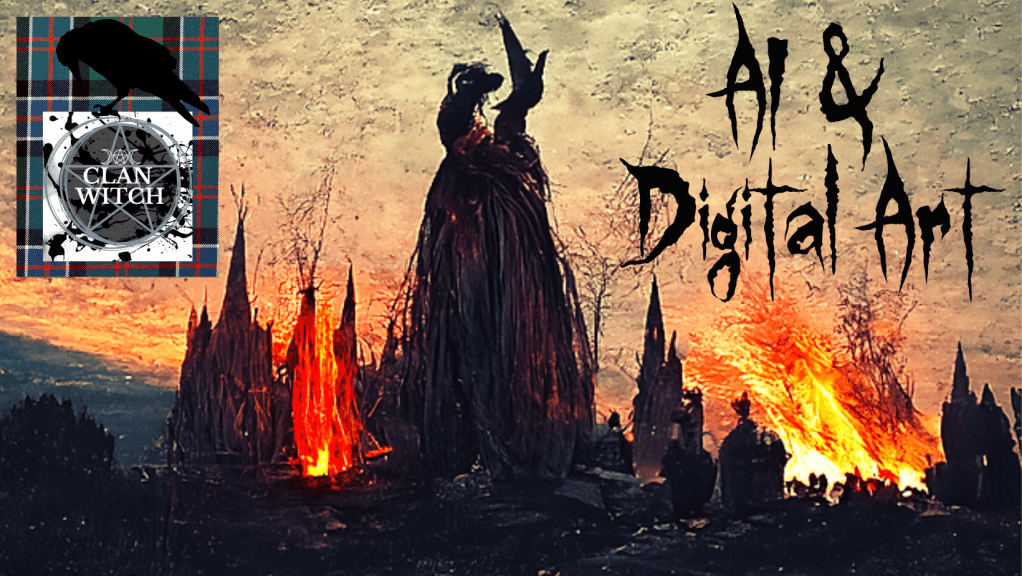
It all kicked off on social media for a 24-hour period, which turned into outright bullying. It was a witch hunt, and the bandwagon was a disgusting display of how quickly negativity spirals in the digital age. There’s been a lot of it lately. Being new to the Twitter platform, it seems like a source for much of that ‘hate’ energy. Perhaps I’ve just not been exposed to that much (thankfully)! Anyway, I posted my tuppence worth on Facebook and thought I’d share here since it’s topical within book publishing and is unlikely to disappear any time soon.
The advancements in technology are astounding; we can all agree. The changes in my lifetime that have opened doors for global collaborations and distribution of art, music and literature are beyond what we could have imagined only a few decades ago. Technological advances have indeed made as many as it has broken.
From handwriting to typewriters to computers and printers. Pigeons, boats, airmail, fax, email and instant electronic delivery of words and art. And as difficult an adjustment as some changes may be at first, many ultimately embrace them.
We’ve been carving art from rock with stones since man stood upright. How much art and expression have changed is magnificent, and none of the changes takes away from how inspiring those first scratchings of creativity and communication embedded into our history, into the rocks, the bones are and always will be.
I remember turning my nose up at ‘digital cameras’ and ‘digital art’ when they were developed. I admit my attitude then lacked maturity, and there was perhaps a bit of snobbery. Now, I have a digital camera permanently attached to my hand! There’s magic in a dark room and effects that cannot be achieved any other way. You know what, it doesn’t have to be one or the other — I appreciate both art forms. And I like that people can capture crisper ‘memories’ in photos without professional skill. It’s (arguably) more accessible.
Going after AI is like going after anything else that was once ‘new’ before it. No, it’s not the same as paint on canvas or a human digital artist layering and developing elements to create a unique piece. It isn’t supposed to be either!
I don’t think any creative should be threatened by AI technology (at this point).
It seems that folk are so quick (on social media) to jump on the attack. Pitchforks out, ready for the witch hunt, taking it out on someone entirely undeserving. Whatever happened to the old sentiment ‘if you’ve not got anything nice to say, don’t say anything at all’?
And for all of us working in independent/small press publishing, in whatever role, I wonder what we would be doing without technological advancements. Digital artists would not exist. Self/Independent Publishing would not exist as it does now. Haven’t we each experienced archaic attitudes looking down their noses at our work at one point or another? It seems a somewhat hypocritical thing to go on the attack for.
Here in the village, the longest day of light is obscured by dense, low-hanging clouds. Heat permeates air molecules, caressing the skin and teasing water just out of reach.
The rain may come, or she may not. Either way, flames will lick skyward.
Flames will dance with padding feet, and shadows and ash will remark spiritual and physical boundaries on Litha.
Steeped in traditions around the globe, the essence of the Sabbat (when the sun is further from the equator) and her rituals are ultimately the same. We dance in tandem. Burning off what is no longer needed, shedding skins, and embracing what is filled with nourishing light and growth opportunities. This is a Sabbat of rebirth, regeneration through fire and light.
Evidence of Solstice traditions goes back to at least the Neolithic era.
Some consider Summer Solstice as Midsummer, and others consider it only the beginning. Like Winter Solstice, I’ve always taken the literal translation of these sabbats being the midpoint of the season regardless of climate, which in Scotland can be unpredictable.
Some traditions of this festival of sun worship can be found in numerous sources. This one is a nice quick read over on National Trust.
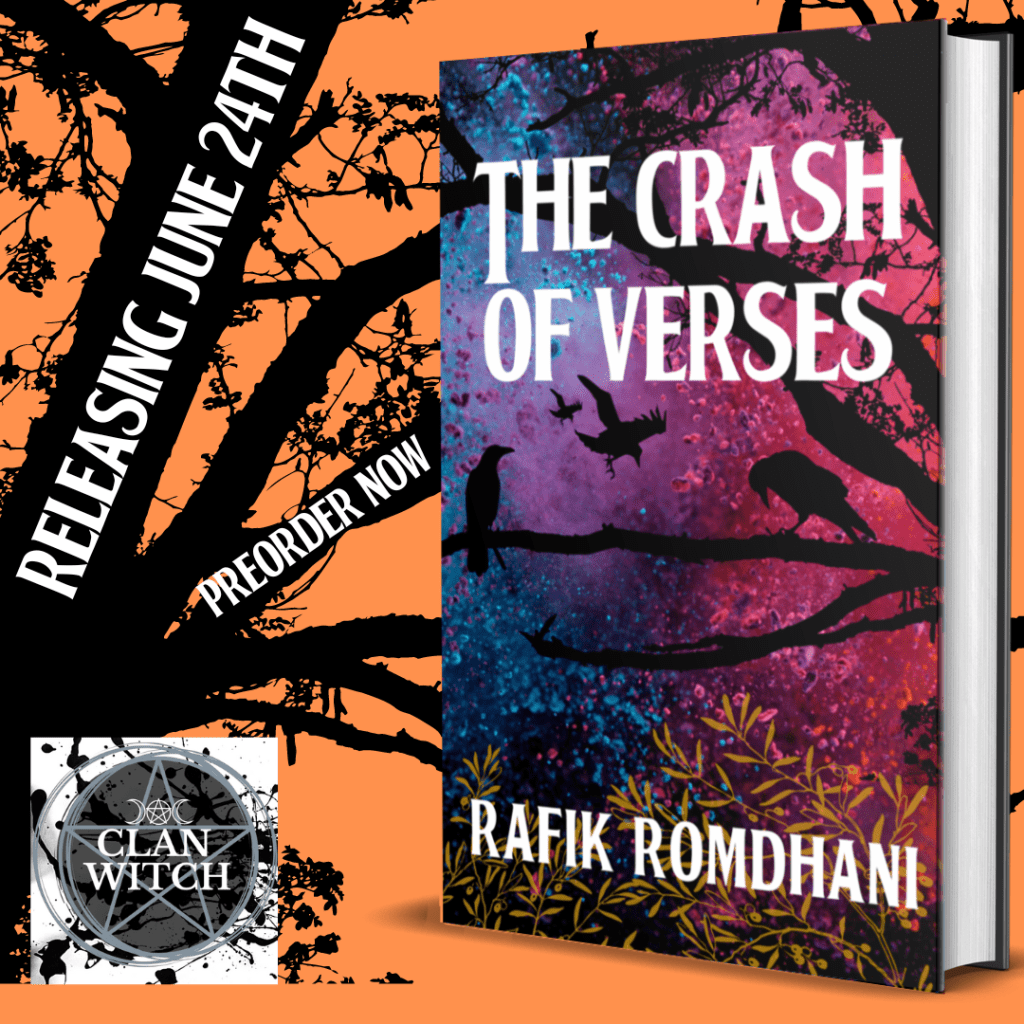
This week welcomes the release of Rafik Romdhani’s second poetry collection, The Crash of Verses. A hearty congratulations to this exemplary wordsmith on his newest release! Working with the author in developing his manuscript to present digital and print editions to the public was a pleasure.
The book is available to purchase via this universal link. Early reviews have been shared on Goodreads, which have been excellent so far (and well deserved). If you pick up the book, please consider leaving an honest review on your prefered platform. These are incredibly valuable to other readers and independent creators alike.
About Rafik Romdhani
Rafik Romdhani was born to Salah Romdhani and Mbarka Romdhani in Rakada Kairouan, Tunisia in 1981. He grew up on a large farm, where like many Tunisian children, he undertook years of heavy, back-breaking work. He is a poet by nature and an English teacher by profession. He studied English Language and Literature in the Faculty of Arts, University of Kairouan and started teaching in 2006 in Tunisia. From 2012 he taught English in the Sultanate of Oman before returning to work again in Tunisian schools in 2016.
Romdhani began writing poetry in 2000. His influences include Charles Baudelaire, Herbert Zbiginiew, T. S. Eliot, Dylan Thomas, Seamus Heaney, and Sghaier Aouled Ahmed. His debut collection, Dance of the Metaphors, released in 2021, represents an authentic outpouring of his long-suppressed desire to share his poetry with a wider audience. His second collection, The Crash of Verses, hits global audiences in 2022.
Romdhani’s work tackles themes from his observations of nature, politics, culture, society and humanity. His prose is exquisitely conceived and presented in a form as elegantly classical as it is strikingly modern. In his prose, readers are guaranteed a journey never to be forgotten.
I wrote my first short story of 2022 and submitted it to a publisher at the weekend.
My aim this year was always to pull away from short story writing (and submitting) to focus on longer works, my coursework and editing.
And I’ve stuck to it pretty rigidly, even when declining offers is painful! But spreading oneself too thin degrades everything.
I’m not going to go into the details of this short story, but I will say that its content, along with recent conversations with other writers, got me thinking; If I had a higher readership, I’d be cancelled.
I know there are many faux pas and taboos that change over time, and my work constantly bears the weight of uncomfortable themes. Horrifying right? One of the reasons I now include content warnings is to support readers sensitive to particular themes. It is not a poor taste marketing strategy. It is genuinely to deter readers that could feel hurt by my work. If I’m doing my job correctly, my work (in horror particularly) should be uncomfortable.
Over the last few years, there has been a notable request for ‘diversity’ from publishers demanding representation from marginalised groups — in a writer’s personal circumstances and in the characters we create to tell our stories. In this quest, many are outright discrimination, the very thing they claim to be trying to ‘correct’. ‘We demand diversity and representation unless you’re a cis white male’ being the most prominent. How dare they! On top of that, these diversity thumpers are dictating the presence of character archetypes in a creative’s work! ‘No LGBTQI+ representation? Better squeeze one in there, to keep everyone happy.’
Well, quite frankly fuck that! I don’t fall in line with any dictatorship! And it has zero place in art of any kind!
I am anti book banning.
I am anti art burning.
I am anti-censorship.
I am anti-dictatorship.
If you don’t like an artist’s material — don’t buy a ticket, don’t read their work and don’t dictate how anyone else should feel about it! Such arrogance is deeply misguided and kills art. It doesn’t promote it; it doesn’t promote equality or diversity. You’re foolish if you think that it does. The great tapestry of creative output is the very definition of diversification and multicultural without a pre-set dictated agenda!
This week, we’re coming out of the stacks! We are letting the other book out of the bag and sharing a COVER REVEAL (that may be subject to slight changes) for a truly exceptional project with my magical mistress of folklore and mayhem, the lady in red, Ruthann Jagge! We are co-authoring a spectacular world for you. As the wheel turns to the darker side of 2022, you are invited to ‘Delevan House’. Here is the sneak peek of the cover art designed by the talented Don Noble of Rooster Republic Press.
Coming in 2022
We are a red-hot fusion that is guaranteed to create major waves; that is a promise!
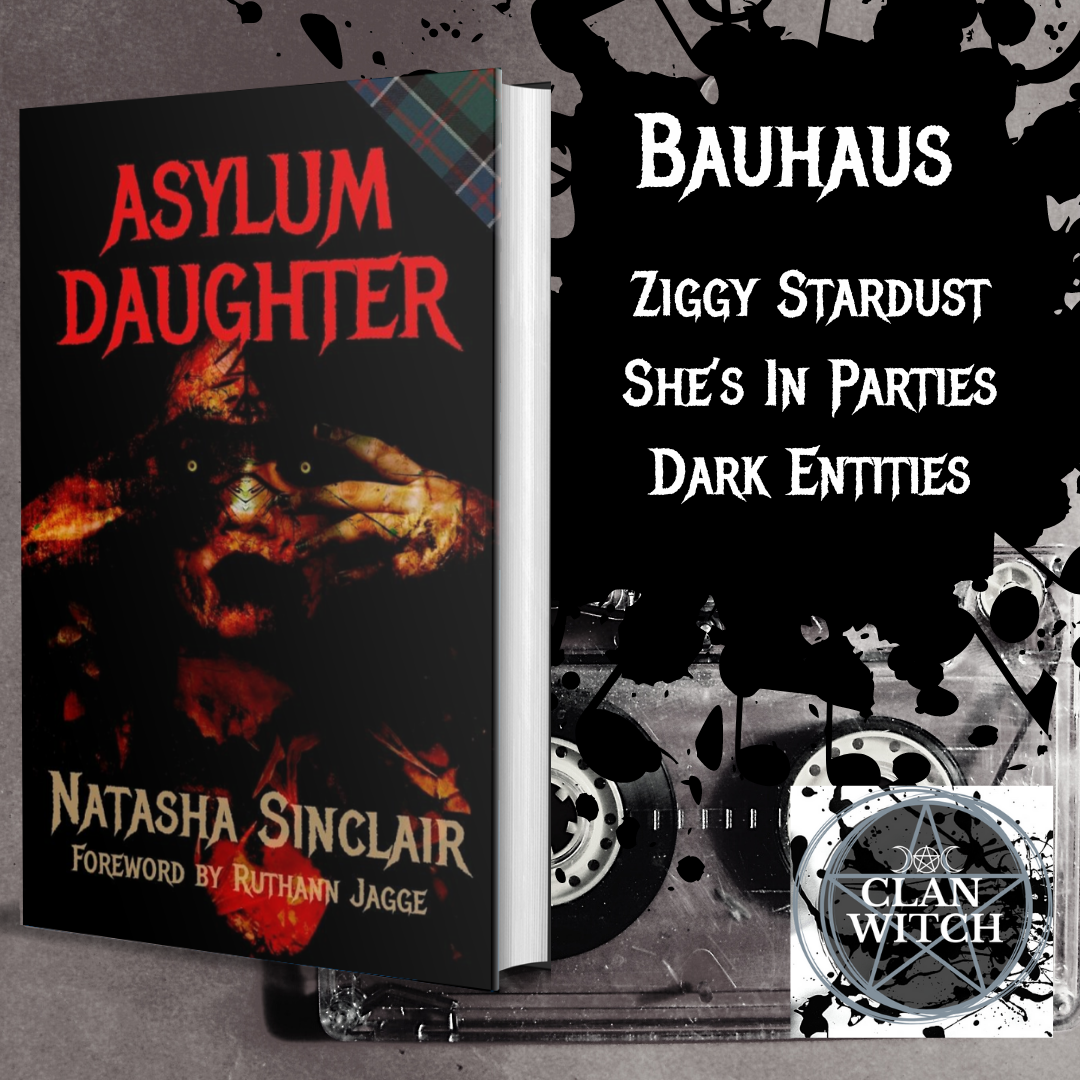
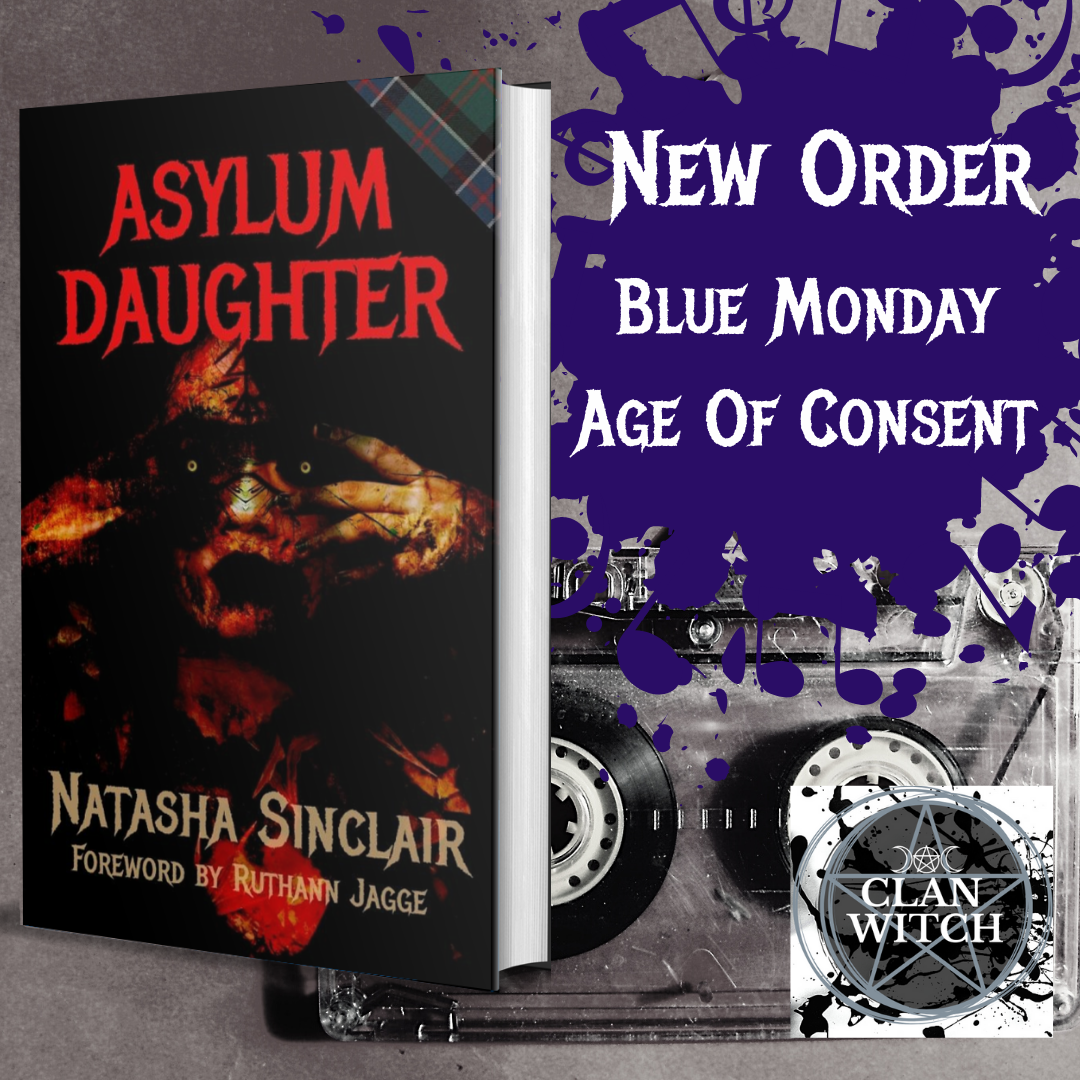
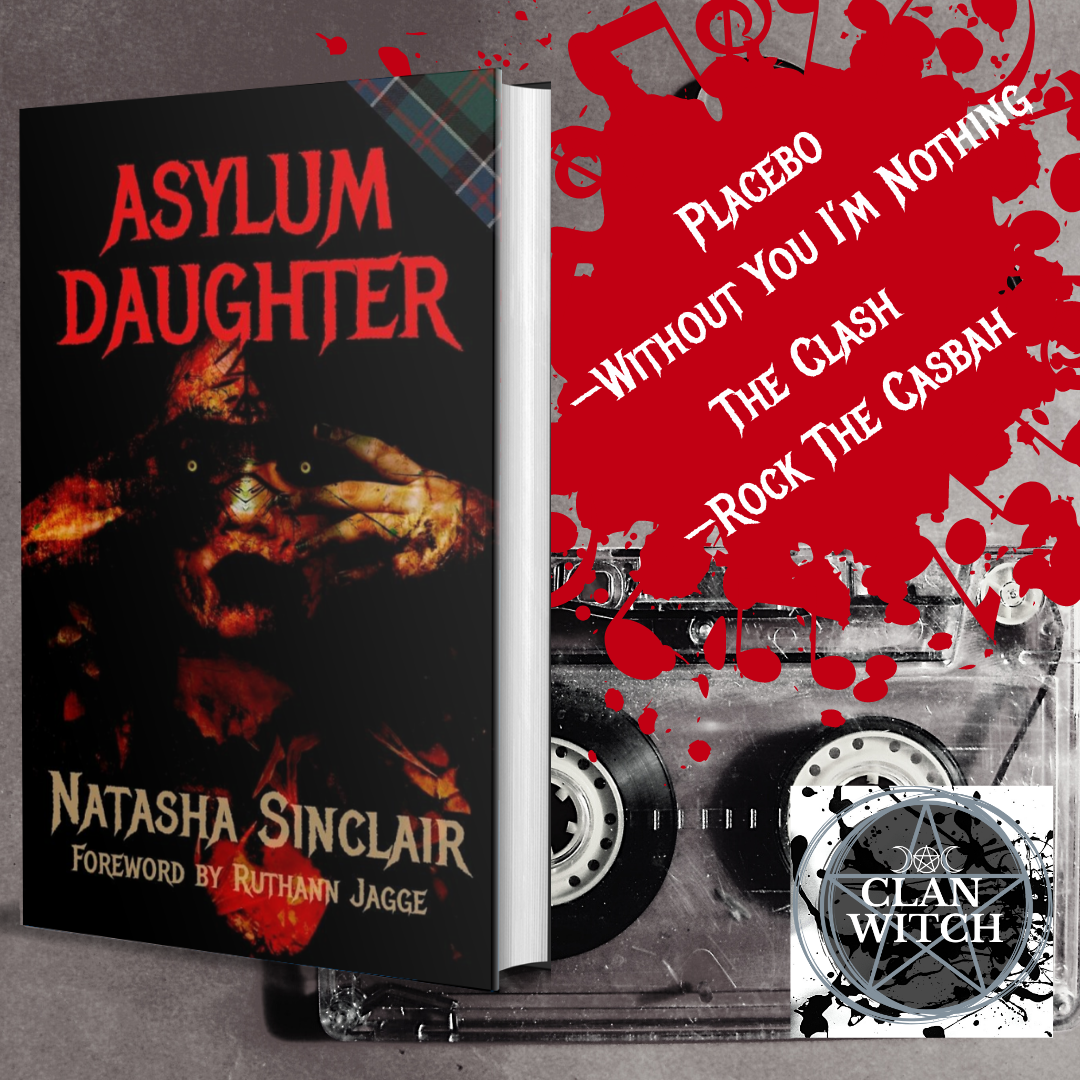
Music is such a profound part of my writing process and always has been. With the imminent release of my novella, Asylum Daughter, I wanted to share the music that formed the soundtrack to the writing of this piece.
Art influences art, and I couldn’t create without music. Every piece I write has its own playlist. Sometimes, those playlists are unexpected and not my taste, but the characters have their styles. I can’t argue. The soundtrack to Asylum Daughter was ‘80s heavy and all good by me.
I can’t wait to hear what you think! And feel free to check out some of the early readers thoughts on Goodreads.