
Delevan House: Part 1 We’ve enjoyed sharing ‘The Making of Delevan House’ with you in a series of posts on Brazen Folk Horror before our release on …
The Cast of Delevan House #1
Delevan House: Part 1 We’ve enjoyed sharing ‘The Making of Delevan House’ with you in a series of posts on Brazen Folk Horror before our release on …
The Cast of Delevan House #1

Delevan House is a dark fantasy horror that leans heavily on folk tales, mysticism, and lore. The village of Badb is a place with many secrets …
Delevan House by Ruthann Jagge and Natasha Sinclair

Access the playlist Ruthann and Natasha created the first Brazen Folk Horror novel to on Amazon Music or Spotify. Just click! Order Delevan House …
The Making of Delevan House #21

Order Delevan House here.
The Making of Delevan House #20

The release of Delevan House is only a month away! And trust us when we say there will be far deeper articles shared on Brazen Folk Horror about the …
The Making of Delevan House #19

December 21, 2022, is the Winter Solstice. It’s the shortest day and the longest night of the year. In Celtic Traditions, Winter Solstice sees the …
Brazen Solstice 2022

Incesticide: Collected Horror has almost emerged! Due to some interruptions within the industry and the panic rumour mills spinning, I decided to get things placed early to ensure the print edition launched in time with the digital. Well, this strike was swift, and the print editions are now (quietly) available ahead of the official release of December 14th.
The collection features nine unique short stories, each followed by a few words on how they came to be.
I painted the artwork for the book. Taking loose inspiration from the book’s namesake – Nirvana’s Incesticide cover art by Kurdt Cobain. I was delighted with how the painting turned out, and have created some exclusive products featuring the print available on my Etsy store.
Thank you to everyone who had preordered. I hope you enjoy my little morsels of horror.
If you fancy a listening to me reading a story from the book, Fuckin’ Maggots is featured on my Youtube.


—Guy Fawkes/Bonfire Night.
It’s been little to do with politics for a long time.
When it once celebrated the failed gunpowder plot — where Catholic Englishman Guido Fawkes was found guarding the explosives intended to assassinate King James VI (and I) and members of the House of Lords on 5th November 1605.
This is the socially acceptable night to light fires and set off explosions into the sky! As effigies of Guy Fawkes are set upon bonfires and burned in commemoration.
As a child of the 20th Century, I simply didn’t get it. Kids knocking on doors collecting for ‘The Guy’. While it’s cited that the commemoration is for the failure of the Gunpowder Plot. I’m not sure that that’s entirely true everywhere, given the general feelings towards the English parliament (extending far beyond the 17th century) and King James VI (and I) — who was in many ways a tyrant.
This acknowledgement in either regard is simply an excuse for a night of careless mayhem. Where folks can legally purchase and let off explosives without direct repercussions. Well, I say that, but the emergency services are always under heavy strain during these pointless and reckless (even when ‘organised’ festivities).
In a world of hypocrisy and contradiction, it’s a time I can’t abide. I do not involve my children in the ‘fun’. Not when innocent wildlife are burned alive, as they seek refuge or places to hibernate safely for winter within the pyres. Not when we have heart attacks and panic in nests from the booms, the lights, the smoke — the terror! Not when domestic animals straying or lost fall victim to maniacs who think it’s funny to stick rockets inside of them are tie explosives to their tails. Not when those at home are cowering from what feels like a war raging just outside their homes.
A nation of animal lovers?
Are we ahead of the game in caring for the environment?
Minimising our environmental impact and emissions?
I fucking well think not!

Imbolc is situated between Winter Solstice and Spring Equinox. It’s a Celtic festival celebrated across Scotland and Ireland since the Neolithic …
Delevan House Announcement
One of the most prolific characterisations called upon in the writing of horror fiction is that of the Witch. The incarnations cross genres, not exclusive to horror. The notions of the Witch rouse deep interest that peaks at no other season as high as it does around Halloween. From the green-painted faces of cloaked children playing the hag, practicing cackles for trick-or-treating shenanigans to the overwhelming number of book and movie releases parading their Witch down the street, through blood-thirsty crowds for all to fear and jeer. It seems that our curiosity, bedazzlement and fear of her are insatiable.

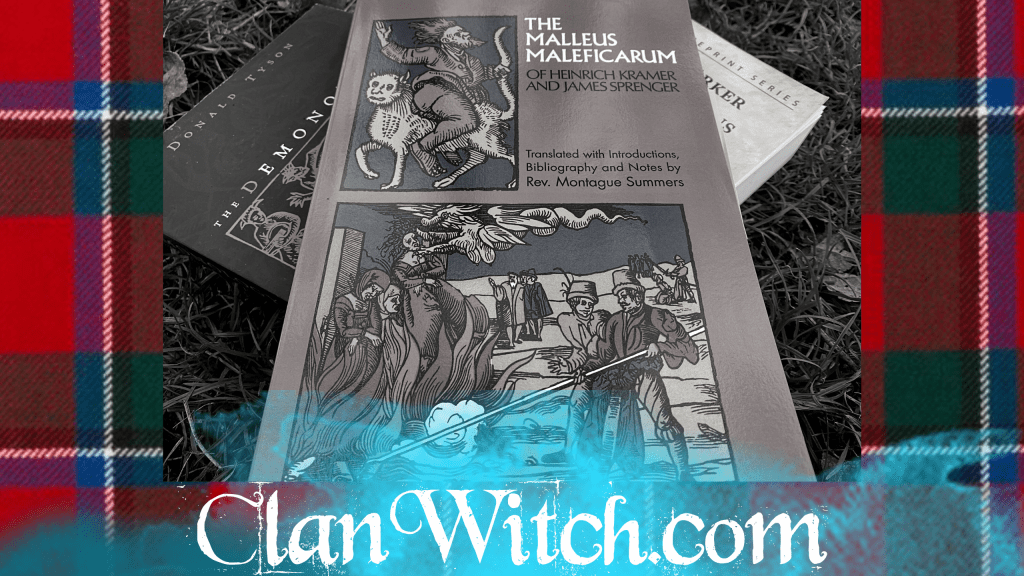
Our Witch has been the macabre crowd-pleaser since the hysteria that rippled through the world with the support, encouragement and rise of Christianity in organised religious dominance. The mania began in Europe in the fourteenth century, and such infamous texts as the ‘Malleus Maleficarum’ by Heinrich Kramer, published in 1486, propelled the hysteria and resulting brutality of the executions peaking several times between 1560-1630. Leaning heavily on the support of the church, the author of the text included Pope Innocent VIII’s 1484 Papal Bull, Summis Desedirantes, as the opening to the ‘Malleus Maleficarum’.
In this article, the pronouns she and her are favoured when referencing the Witch. While this is not uncommon, it must be acknowledged that from a true historical context, those trialled, persecuted and executed were predominantly female. There were men among them too. And, of course, in fiction, and real-life practitioners of the craft or occult arts, Witch can be of any gender. The dominance of prosecution and the use of the word as a slanderous term is weighted heavily towards women, hence the conscious choice of those pronouns here. Evidence suggests that 85% of the accused (in Scotland) were women. Fuelled by the desire for religious and political dominance, the Witch persecutions were also profoundly misogynistic. Hundreds of years on, these are issues which still impact society today.
The earliest printed reference of the noun ‘Witch’ was c950-c1010, Early Middle English, (Ælfric Homily (Corpus Cambr. 178) in J. C. Pope Homilies of Ælfric (1968) II. 792 Nu segð se wyrdwritere þæt seo wicce sceolde aræran þa of deaþe þone Drihtnes witegan Samuhel gehaten.) The heavily linked noun ‘Witchcraft’ was also first printed in the Early Middle English period, c1000, (Ælfric Lives of Saints (Julius) (1881) I. 182 Animað hraðe þa reðan wiccan, seo þe ðus awent þurh wiccecræft manna mod.) Although it may appear, at times, like a trend has taken hold in books or film — the Witch-craze has never really left us. Our Witch has held claim as a steadfast trend of constancy throughout history, one to love or hate but never to be indifferent to. This fascination or, perhaps more, obsession has endured. The Witch continues to thrive, though in a far more acceptable way than during such times as the six Witchcraft Acts, which presided through British history, criminalising those deemed to be Witchcraft practitioners, punishable by death. Scotland had a particular thirst for Witch hunts, murdering five times more people for crimes of Witchcraft than anywhere else in Europe.
In the 21st century, such Acts as these no longer have any place in European legal systems. Committed to a shameful part of human history, where many are working to recognise those murdered and have their criminal status pardoned. These women and men brutally murdered under the laws of the time were innocent of their charges. During the periods of Witch-mania, many (if not all) of those accused, trialled and executed were not done so fairly. Sensationalised witness reports that commonly claimed diabolism, shape-shifting and dancing with the Devil himself became a death sentence. Logic and facts had no place to play in these judicial procedures; macabre entertainment for the masses writhing in fear and fantasy that they themselves created. The control of organised religion reigning at its finest. Documents from these cases are often sketchy, and some are entirely nonexistent. Many cases escalated to local churches, and communities taking the law into their blood-thirsty hands. If anyone was dancing with the Devil, was it really those persecuted as Witches?
Considering this grisly past that spawned in Europe and spread rapidly around the globe, we must remember that there are countries where accusations of Witchcraft stillresult in severe and brutal physical punishments (and death) today. While here in Scotland, the Witchcraft Act was repealed in 1736, and the last documented legal execution took place in 1727, almost 300 years ago, religious and spiritual persecution is still alive and comes in many guises.
In modern Europe, the historic Witch-persecutions are crisscrossed with a romanticism of a deadly, dark past, and fictional notions embraced to stroke these romantic ideas of magical ancestry. She is symbolic of both innate feminine strength and endurance as well as female oppression by a predominantly patriarchal society. When considering the data available from cases of the Witch trials and applying something missing from these cases—logic—one thing is clear, many of those trialled and executed were not Witches; they were not pagan in the contexts of today. Many of the accused and found guilty were victims of flimsy, vague laws, hearsay, panic and hate.
There are groups still fighting to seek justice for these heinous acts, such as Witches of Scotland, ‘–a campaign for justice; for a legal pardon, an apology and national monument for the thousands of people – mostly women – that were convicted of Witchcraft and executed between 1563 and 1736 in Scotland.’
While work is still ongoing to achieve the legal pardon of some 4,000 people killed under the Acts, a formal apology was granted by the First Minister of Scotland on 8th March 2022, “on International Women’s Day, as First Minister on behalf of the Scottish Government, I am choosing to acknowledge that egregious historic injustice and extend a formal, posthumous apology to all those accused, convicted, vilified or executed under the Witchcraft Act 1563.” Read the full statement here.
While it is, perhaps, admirable to fight for the status of the victims of the laws of that horrific time, and it’s important to acknowledge the gross misconducts of governments, kings, religion—misconducts that were regarded as just at the time. Their greed for ultimate control and thirst for blood and brandishing ‘authority’, the acknowledgments, memorials, and apologies of descendants will never give the victims their lives back. We cannot undo the horror of their torture—starved, pricked, stripped, poured with tar, thrown in barrels and rolled through the streets, strangled, drowned, burned, all under the eyes of the law, ‘God’, their communities and families. There’s no making up to the victims labelled as Witches. And there’s no romance in their trials. What we must do is step forward; don’t stand fearful among the crowd breeding hate. Learn from the past. Step forward. Speak up for injustices, no matter how small they may appear. History and present day horrors show us how easily pandemonium can take hold, by then it’s too late. Say nothing, do nothing, and one may as well be lighting the pyre.

To my fellow creative fiction writers: If you find yourself allured by the Witch trend, design her without feigning research—reaching for a few easy-to-find titles, selected based on the copy intended to sell you that specific content, the cover, or recommendations from non-practitioners is not research. This is the microwaveable noodle of cooking. This approach will never bring you proper knowledge and depth to create authentic flavour.
Design her with the authenticity of a true creative; think outside those boxes. That is the way of a Witch—pay homage to that in your creative endeavours. If you desire true historical context or true spiritual context, you’ll have to dive much deeper than any off-the-rack ‘spell book’. These books are often born from limited research themselves to base one’s research on, then you’d be in a sorry state to claim to know anythings but anecdotal drivel. Research on these subjects is a dedicated, lifelong business. Not a flurry of ticking boxes. Spiritually, there is reason many who walk occult or pagan paths refer to life and work within these arts as an ongoing ‘practice’. The trials and persecution of accused Witches is entirely separate to practitioners of any one of many pagan pathways—real Witches. As a practitioner of 20+ years, my clan’s Witch, I am still a mere amateur. Arrogance has no place in these arts, if it does in any at all.
 Clan Witch & Word Refinery