
It’s been a couple of years since I visited this spot. Rosslyn Chapel, and Roslin Glen is one of my favourite places to spend time. There’s an immense peace around this area. It’s a cleansing meander where time could stop—of course, it never does; what we spend can never be made back. This setting has inspired many poets, storytellers, novelists and artists for hundreds of years, if not more. I admit it inspired a fictional setting in one of my short stories. I wonder if any of my readers could spot it? That story has more to it in the pipeline — don’t they always.
Today, after another restless night, I took a slow venture to Roslin village in Edinburgh. My journey was flanked with sorrow from the moment I left the house; a lone magpie was almost constant in my sights. Different individuals, but always a solitary sorrow. I penned some notes. At the village, I paid a visit to the chapel first. I asked after William — anyone who has known Rosslyn in recent years may know of the black cat often found around and inside the chapel. My heart hurt to hear of his passing in 2021. The first time I visited, he sat by my side in the chapel. The cool cat left a strong impression. When inside, I took a moment on that pew with a memory of that energy. We’re all just passing through.
Rosslyn Chapel was founded in 1446 by Sir William St Clair (Sinclair) as a family chapel. (Like the name? As a Sinclair, I have a blood draw to the place like many from our rich Scottish/French/Scandinavian line). The founder died before the building’s completion 40 years later. It was not finished to William’s original design. As with many such buildings, following the 16th-century reformations, the little chapel fell into disrepair. Cromwell’s men later used it during their attack in the 17th-century to stable their horses. In the 19th-century, the chapel underwent some Victorian restoration, and services began again. Unfortunately, the work performed to protect the sandstone carvings, along with the high humidity within the chapel, was discovered to have a deteriorating effect, and major restoration works began in the late 20th-century by The Rosslyn Chapel Trust.
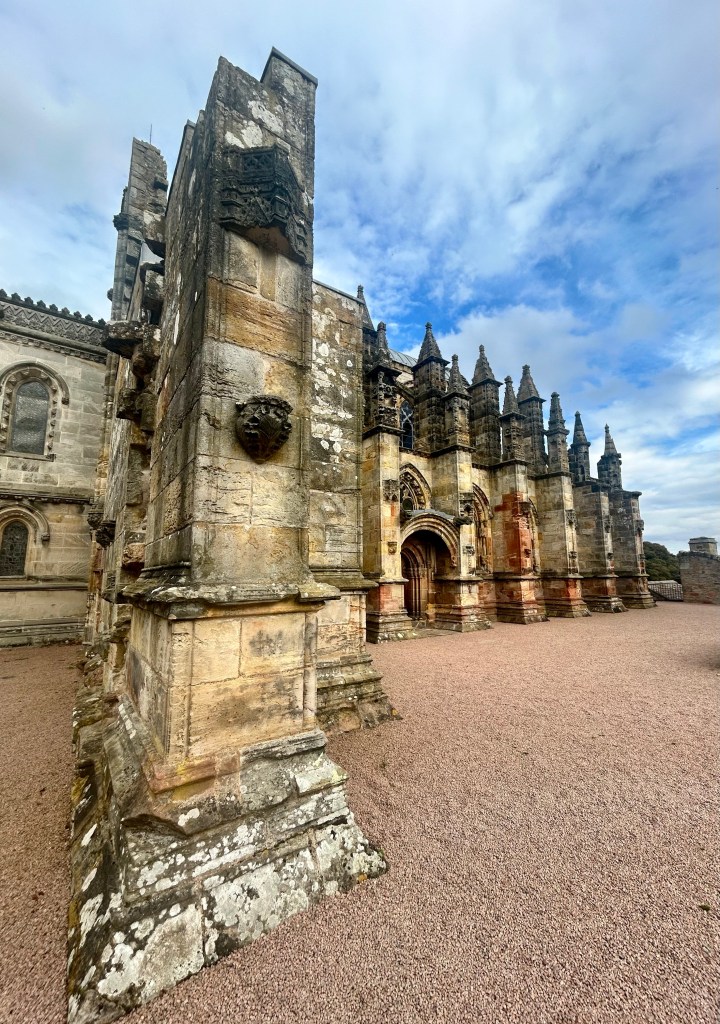
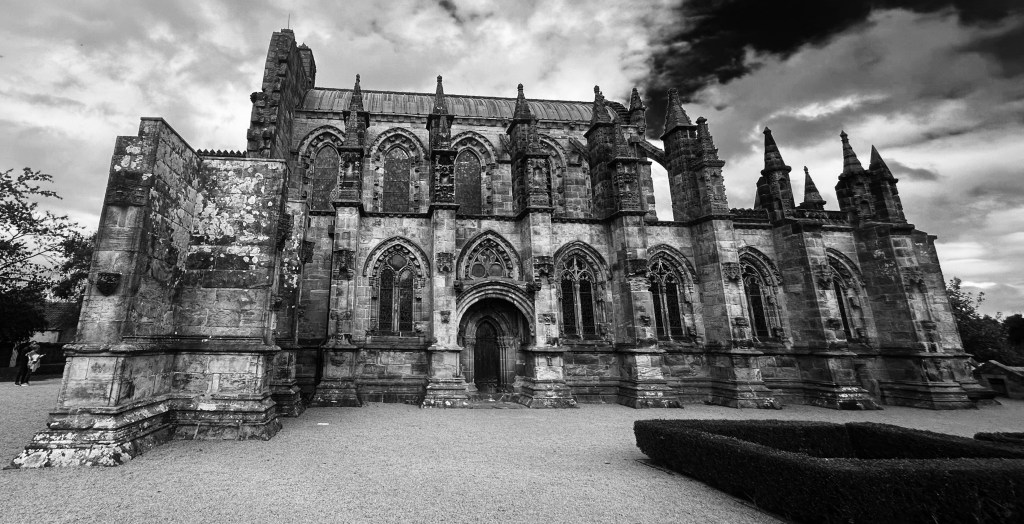


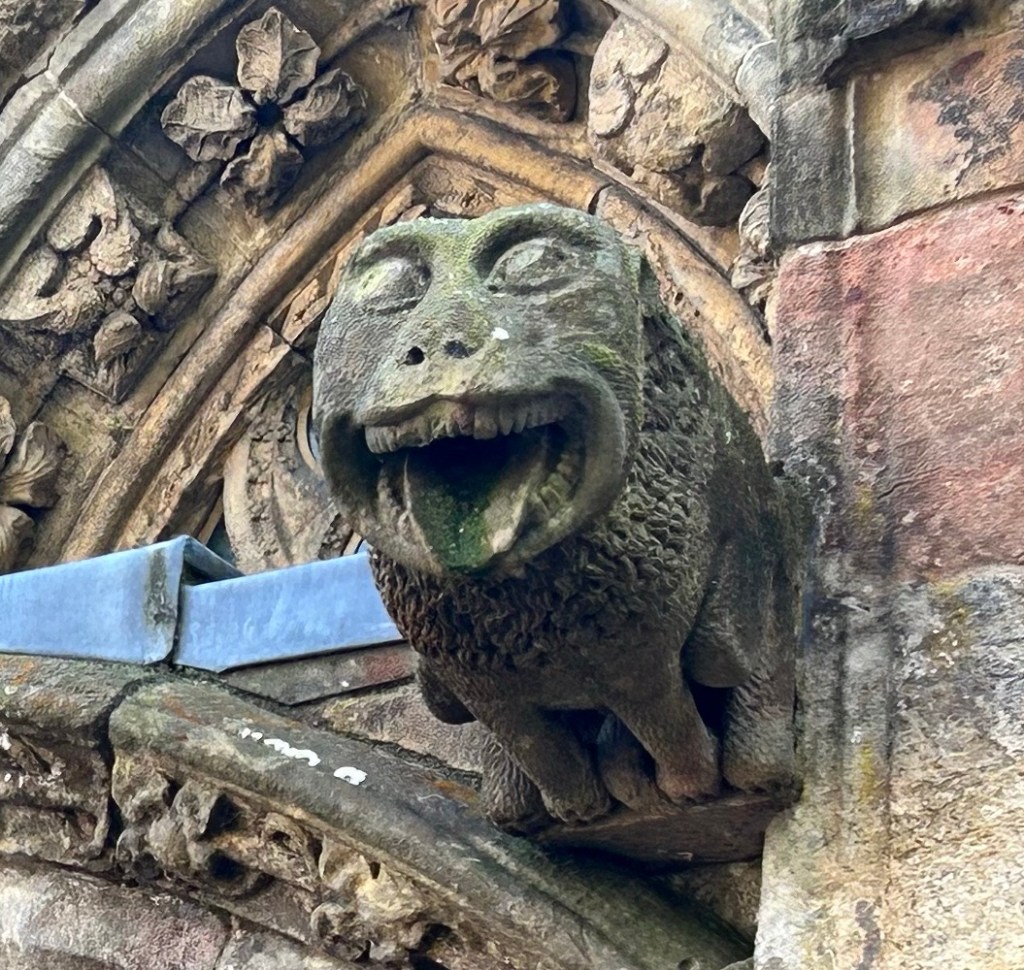
Read more about the chapel by visiting here.
I find it interesting how peaceful the building itself is. Silence enveloped my bones the first time I stepped inside it; silence and comfort. I have sometimes felt visceral unrest in Christian buildings — the energy poured into their design is distinctly to pay worship to their single god—a god whose people I’ve had conflict with. I feel the judgment and persecution beneath its serenely carved masks and outward message of peace. Peace that’s splattered in blood. I can feel dirty, hateful hands squeezing my throat. I’ve never felt a whisper of that at Rosslyn Chapel. One could shelter there under all those carved eyes, flowers, stars, and green men. Rosslyn feels more spiritual than religious. I love that about her. Perhaps she was designed for monotheism, but she feels far more polytheistic to this pagan. And you don’t have to look far online for information and theories on the glorious tapestry of symbolism carved into the sandstone inside and out of this divine little gothic gem. But, if you’ve never been, I suggest not reading a single thing — visit her, sit in her cradle of silence and tell me what you feel.
The chapel sits above Roslin Glen. A wee wander down beneath and by the ruins of Roslin Castle is a divine way to cap off or sandwich a visit to the chapel. The ancient woodlands along the glorious River Esk are perfect for a quiet contemplation walk and just as good for a fun day out with the kids. I needed the former, and I will no doubt be taking my little monsters on the next trip over.
Oh! As I left the chapel grounds, I was approached by a confident and curious ginger cat. We exchanged pleasantries, maybe I’ll see him next time on the pews.


 LIMITED TIME




 Clan Witch & Word Refinery